

Choosing the wrong industrial adhesive is an expensive mistake.
Line downtime, popped flaps, compromised product integrity, and wasted materials—all because a formulation couldn’t handle your production floor’s reality.
In manufacturing, a bond isn’t just a point of contact; it’s a critical component of your product’s structural success. Whether you are running high-speed automated packaging lines or assembling complex automotive interiors, finding the exact hot melt glue formulation is what separates seamless throughput from costly manufacturing bottlenecks.
But with variables like open time and set time, substrate surface energy, and adhesive viscosity to consider, finding that perfect match can feel like hitting a moving target.
At KAISUN, we engineer high-performance hot melt solutions designed to survive real-world stresses. This ultimate guide will break down the exact technical parameters you need to evaluate—from polymer chemistries to thermal stability—so you can make an educated purchasing decision and optimize your line.
Let’s dive right in.
Demystifying the Core Hot Melt Adhesive Chemistries
Choosing the right industrial adhesive selection starts with understanding the polymers behind the performance. Different applications demand different molecular backbones. Below are the main types of hot melt adhesives used across modern manufacturing lines.
Ethylene Vinyl Acetate (EVA)
EVA hot melt adhesive is the traditional workhorse of the packaging industry. It offers a cost-effective solution for fast-paced sealing operations.
- Best For: Standard paperboard, corrugated boxes, and paper conversion.
- Pros: Rapid setting speed, economical, and works well with standard industrial dispensing equipment.
- Cons: Limited thermal stability; prone to charring if left heated for long periods.
Polyolefin Hot Melt Adhesive
Polyolefin hot melt adhesive, including metallocene-based formulations, represents the evolution of polyolefin technology, delivering cleaner processing and more stable performance where standard EVA may fall short.
- Best For: High-volume packaging, end-of-line case sealing, PP/PE bonding, and clean-running production lines.
- Pros: Excellent thermal stability, low odor, clean machining, and reduced risk of pot life degradation.
- Cons: Slightly higher initial material cost than standard EVA, and formulation must be matched carefully with the substrate.
Polyurethane Reactive (PUR)
For structural integrity, PUR hot melt adhesive is the premier choice. It cures via atmospheric moisture to form an irreversible chemical bond.
- Best For: Woodworking, automotive interiors, lamination, bookbinding, and packaging adhesive solutions requiring extreme durability.
- Pros: Excellent heat resistance, chemical resistance, moisture resistance, and long-term bond strength once fully cured.
- Cons: Requires moisture-sealed packaging, proper storage, and specialized or well-controlled dispensing equipment.
Amorphous Poly Alpha Olefin (APAO)
APAO hot melt adhesive is known for its long open time, flexibility, and good adhesion to soft or difficult substrates. It is often used when standard EVA sets too quickly or when the finished product needs a more flexible bond line.
- Best For: Foam bonding, mattress production, automotive interiors, nonwoven materials, furniture assembly, and flexible substrates.
- Pros: Long open time, good flexibility, low odor, and reliable performance on soft materials.
- Cons: Slower set speed compared with fast-setting EVA or some polyolefin hot melts.
Polyamides (PA)
When your production environment involves extreme temperatures, polyamides deliver the necessary resistance.
- Best For: Electronics potting, filter manufacturing, and heavy-duty automotive gaskets.
- Pros: High melting point and excellent resistance to oils and solvents.
- Cons: Narrow application temperature range window and high viscosity during application.
Pressure Sensitive Adhesives (PSA)
PSA hot melt adhesive remains permanently tacky after cooling, never fully solidifying into a rigid structure.
- Best For: Tapes, labels, protective films, hygiene products, medical dressings, and temporary assembly.
- Pros: Instant aggressive tack, pressure-sensitive bonding, and excellent flexibility.
- Cons: Lower shear strength under continuous heavy loads and not ideal for rigid structural bonding.
Butyl Rubber Hot Melt Adhesive
Butyl rubber hot melt adhesive is mainly used for sealing, waterproofing, and moisture barrier applications. Unlike general bonding adhesives, butyl rubber hot melt is selected when the adhesive layer must block water, air, or vapor while staying flexible over time.
- Best For: Waterproof tapes, construction sealing, automotive sealing, roofing materials, HVAC sealing, and window or door sealing.
- Pros: Excellent moisture resistance, air barrier performance, flexibility, and long-term sealing stability.
- Cons: Better suited for sealing and barrier applications than rigid structural bonding.
Analyzing Your Substrates: What Are You Bonding?
Before you choose a hot melt adhesive selection guide or pick a glue formulation, you have to look at the materials you are putting together. The surfaces dictate the bond. If the chemistry doesn’t match the substrate, the assembly will fail.
Porous vs. Non-Porous Surfaces
Materials behave differently based on their texture and density. How to choose hot melt adhesive always comes down to how the glue penetrates or wets the surface.
- Porous Substrates: Materials like corrugated cardboard, paperboard, wood, and fabrics easily absorb adhesive. They create strong mechanical bonds as the glue sinks into the fibers. EVA hot melt adhesive is usually the go-to here for high-speed packaging adhesive solutions.
- Non-Porous Substrates: Plastics, metals, glass, and glazed ceramics don’t absorb glue. You cannot rely only on a mechanical lock. Instead, you need an industrial adhesive selection such as PUR hot melt or polyolefin hot melt adhesive that can form better adhesion with the surface.
Understanding Substrate Surface Energy
Substrate surface energy determines how well a liquid adhesive “wets out” or spreads across a material.
- High Surface Energy (HSE): Materials like copper, aluminum, and stainless steel pull the adhesive inward, allowing it to spread easily for a tight bond.
- Low Surface Energy (LSE): Plastics like polypropylene (PP) and polyethylene (PE) repel liquids. The adhesive beads up instead of spreading. Bonding LSE plastics requires specialized polyolefin hot melt formulations, PUR adhesives, or surface pre-treatments to improve bonding performance.
Dissimilar Substrate Bonding
In modern manufacturing, you are rarely bonding the same material to itself. You might need to secure plastic trim to an aluminum frame, or foam to painted metal.
When joining different materials, look for an adhesive that stays flexible after curing. Materials expand and contract at different rates when temperatures change. A rigid glue will crack under that stress, while a flexible formulation absorbs the movement and keeps the bond intact.
Key Mechanical & Thermal Performance Metrics for Hot Melt Adhesive Selection
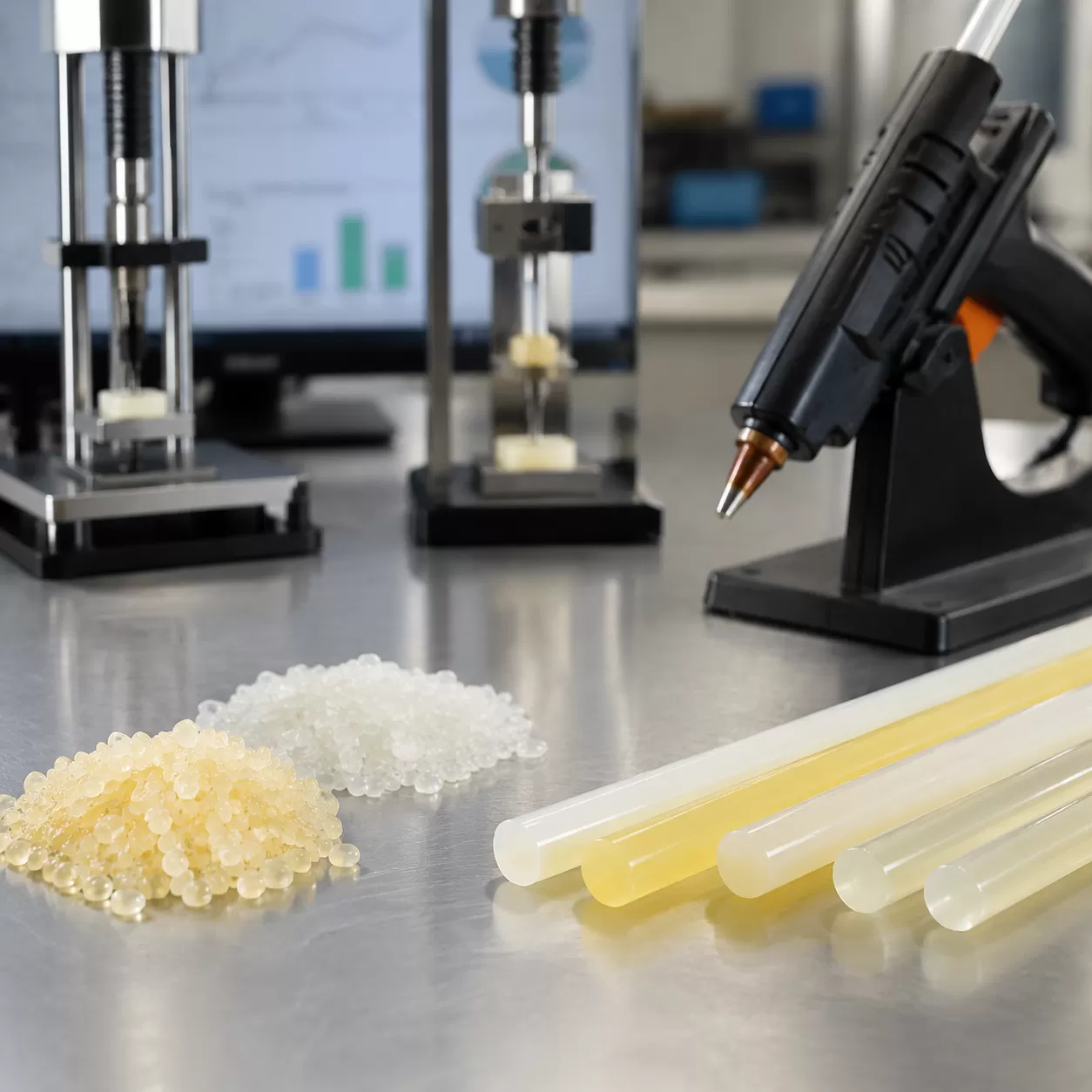
When choosing an industrial adhesive, you have to look past the chemistry and focus on how the glue performs under pressure. Getting the right match for your production line means nailing three critical mechanical and thermal metrics.
Open Time vs. Set Time
Managing these two windows is the secret to a flawless bonding process:
- Open Time: This is the timeframe you have after applying the glue to bring your parts together. If your line moves slowly or requires manual alignment, you need an extended open time.
- Set Time: This is how fast the glue cools or cures and forms an acceptable bond. High-speed packaging adhesive solutions need a fast set time, sometimes within fractions of a second, so boxes stay shut right after compression.
Viscosity and Application Temperature Range
Adhesive viscosity—or how thick the glue is when melted—directly impacts your dispensing equipment and bond quality.
- High Viscosity: Best for bonding porous surfaces like heavy cardboard or wood, as it stays on the surface without sinking in too quickly.
- Low Viscosity: Suitable for high-speed spray applications, thin coatings, or non-porous laminates.
- Application Temperature: Operating within the recommended range ensures optimal flow without causing premature pot life degradation, gelation, or charring.
End-Use Environmental Factors and Thermal Stability
Your bond doesn’t just need to survive the factory; it has to survive the real world. Consider the extreme conditions your finished product will face, from freezing shipping containers to hot warehouses or humid operating environments.
| Environmental Factor | Impact on Bond | Best Fit Solution |
|---|---|---|
| High Heat Exposure | Standard glues may soften and fail. | High thermal stability formulations such as PUR, polyolefin, or polyamide adhesives. |
| Freezing Cold | Glue becomes brittle and cracks. | Flexible EVA, APAO, or selected polyolefin options. |
| Moisture & Chemicals | Delamination and bond failure. | Moisture-curing PUR hot melt or butyl rubber hot melt for sealing applications. |
| Waterproofing Requirement | Water or vapor may penetrate the joint. | Butyl rubber hot melt adhesive for barrier and sealing performance. |
A Step-by-Step Selection Framework for Manufacturers
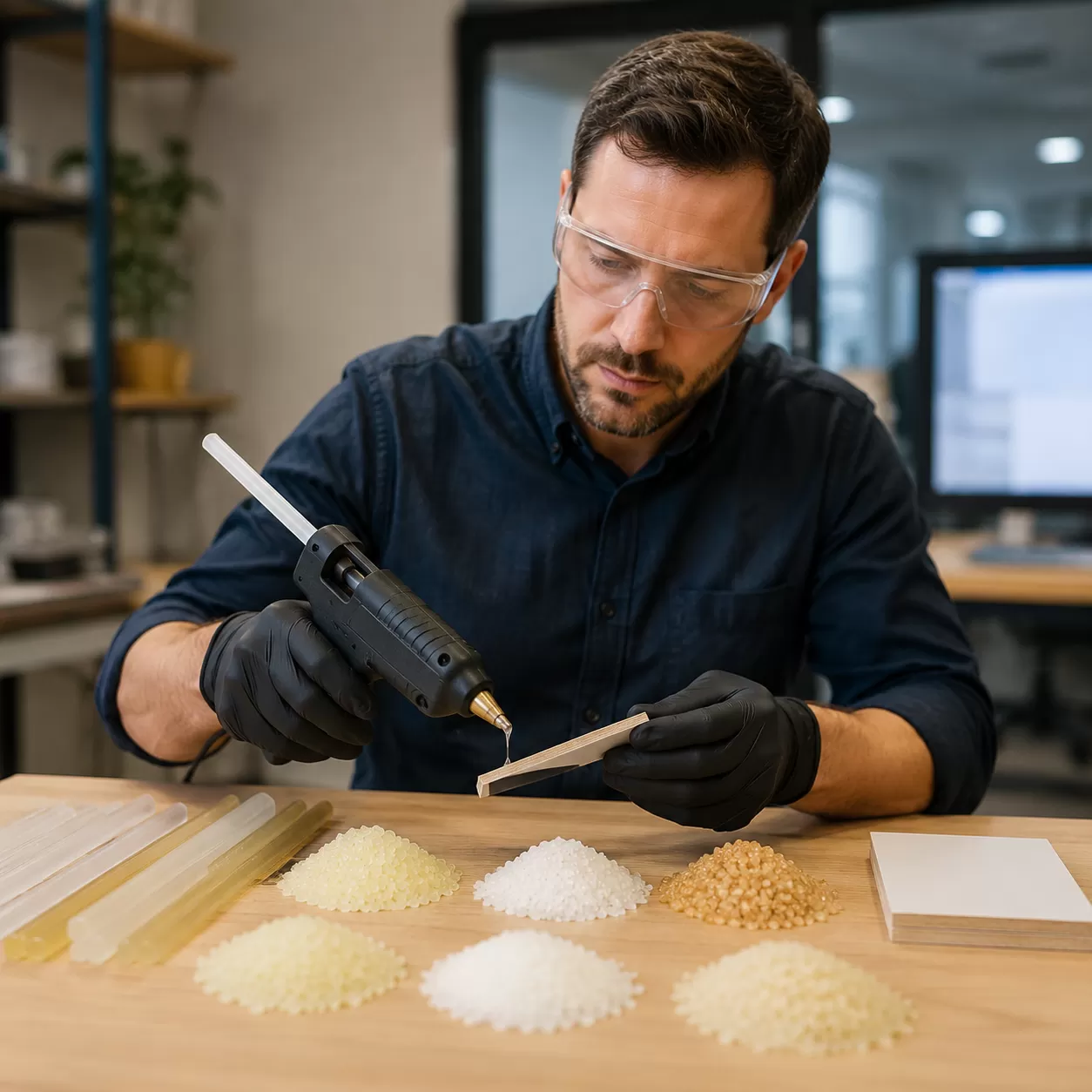
Choosing the right industrial adhesive selection doesn’t have to be guesswork. We use a streamlined framework to help you narrow down the options based on your specific manufacturing environment, line speeds, and product requirements.
Here is how to choose hot melt adhesive solutions that match your operational needs.
Step 1: Define the Production Environment and Speed
Your line speed dictates your adhesive’s necessary curing profile. High-speed automated packaging lines require a virtually instant bond, while manual assembly lines need more flexibility.
- High-Speed Automation: Requires a short open time and set time, often using EVA or polyolefin hot melt adhesive to ensure secure seals within fractions of a second.
- Manual Assembly: Requires a longer open time to allow operators to position parts accurately before the glue solidifies. APAO hot melt adhesive is often useful in these situations.
- Ambient Conditions: Extreme plant temperatures, hot summers, cold storage facilities, or high humidity can directly alter how the adhesive cools and bonds.
Step 2: Establish Thermal Constraints
You must account for both the application temperature range during production and the final environmental exposure of the finished product.
- High-Heat Exposure: Products shipped in storage containers or used near engines need high thermal stability to prevent the bond from releasing.
- Freezing Environments: Packaging adhesive solutions for food or cold-chain logistics must remain flexible at low temperatures to avoid brittle failure.
- Humidity or Moisture: Applications exposed to moisture may require PUR hot melt adhesive or butyl rubber hot melt adhesive, depending on whether the goal is bonding or sealing.
Step 3: Assess Aesthetic and Viscosity Demands
The visual requirements of your finished product and the limits of your industrial dispensing equipment will narrow your choice.
- Visible Bond Lines: Clear or low-odor formulations can help prevent yellowing and maintain clean product aesthetics.
- Adhesive Viscosity: Thin-gauge materials require low-viscosity glues to prevent burn-through, while irregular or porous surfaces require a higher-viscosity, gap-filling formulation.
- Substrate Compatibility: For foam, fabric, or nonwoven materials, APAO or PSA may be more suitable. For plastics such as PP or PE, polyolefin hot melt adhesive may be a better starting point.
Comparison Matrix: Hot Melt Chemistries at a Glance
This hot melt adhesive selection guide matrix breaks down the core characteristics of each major formulation to help you pinpoint the right fit.
| Adhesive Chemistry | Set Speed | Heat Resistance | Flexibility | Best Used For |
|---|---|---|---|---|
| EVA Hot Melt Adhesive | Fast to Medium | Moderate | Medium | Standard case sealing, paperboard packaging, and general assembly |
| Polyolefin Hot Melt Adhesive | Very Fast to Medium | High | Medium | High-speed packaging, PP/PE bonding, and clean-running production lines |
| PUR Hot Melt Adhesive | Medium initial set, cures over time | Excellent | High | Woodworking, automotive interiors, lamination, and heavy-duty product assembly |
| APAO Hot Melt Adhesive | Medium to Slow | High | Very High | Foam bonding, mattress production, nonwovens, and automotive interiors |
| PSA Hot Melt Adhesive | Permanent tack | Low to Medium | Very High | Tapes, labels, protective films, and temporary positioning |
| Butyl Rubber Hot Melt Adhesive | Medium | High | Very High | Waterproof sealing, air barriers, roofing tapes, and automotive sealing |
| Polyamides | Medium | Very High | Low to Medium | Electronics, filters, and high-temperature environments |
Avoiding Common Pitfalls: Equipment Compatibility & Maintenance
Choosing the right industrial adhesive selection is only half the battle. If your dispensing machinery isn’t properly maintained, even the highest quality hot melt glue formulation will fail. Equipment downtime costs money, so keeping your system running smoothly is a top priority.
Preventing Adhesive Charring and Gelation
Charring is the ultimate enemy of packaging lines and assembly plants. When an adhesive sits at a high application temperature range for too long, it degrades. This leads to pot life degradation, resulting in charcoal-like flakes that clog nozzles and ruin filters.
- Watch the Temperature: Never leave your melter idling at full heat during extended shifts or weekend shutdowns. Drop the temperature if the line is down for a long period, following the adhesive supplier’s technical guidance.
- Purge Regularly: Use a dedicated purging compound when switching between different chemistries, such as moving from EVA hot melt adhesive to polyolefin hot melt adhesive.
- Control Moisture for PUR: For highly reactive options like PUR hot melt adhesive, avoid unnecessary moisture exposure to prevent premature curing and gelation inside the system.
Equipment Degradation and Melt-Back
Melt-back occurs when molten adhesive forces its way backward into the hydraulic or pneumatic sections of your industrial dispensing equipment. This usually happens because of incorrect pressure settings or worn-out seals, leading to costly mechanical failures and safety hazards.
- Match Viscosity to Nozzle Size: Operating outside the recommended adhesive viscosity limits forces the pump to work harder, increasing backpressure.
- Check Seals Frequently: High-temperature operations degrade standard rubber seals. Always use seals rated for your specific running temperatures to prevent leaks.
Surface Contamination Checklist
Before pointing fingers at the adhesive or the machinery, check the baseline conditions of your production floor. Contamination is a silent killer of strong bonds, especially when bonding porous surfaces or low-energy plastics.
Use this quick checklist to audit your line daily:
- Dust and Airborne Particulates: Are corrugated dust or manufacturing debris settling on the substrates before the compression line?
- Oil and Lubricants: Are machinery lubricants drifting from the conveyor chains onto the bonding surface?
- Plasticizer Migration: Have your plastic substrates been sitting in storage long enough for oils to bleed to the surface, lowering the substrate surface energy?
- Moisture Levels: Is high factory humidity affecting your substrate surfaces or causing your reactive hot melts to skin over too quickly?
Need Help Choosing the Right Hot Melt Adhesive?
If you are not sure which adhesive chemistry fits your application, start with your substrate, production speed, open time requirement, and end-use environment.
For high-strength bonding, consider PUR hot melt adhesive. For fast packaging lines, EVA hot melt adhesive or polyolefin hot melt adhesive may be more suitable. For labels and tapes, choose PSA hot melt adhesive. For foam, nonwoven, or flexible bonding, compare APAO hot melt adhesive. For waterproof sealing, review butyl rubber hot melt adhesive.
Need help choosing the right hot melt adhesive? Send us your application details.
Frequently Asked Questions: Hot Melt Adhesive Selection
What is the difference between open time and set time?
Open time is the window of time you have to apply the adhesive and join the two substrates together before it cools and loses its tack. Set time is how long it takes for the bond to harden enough for handling. Matching these metrics to your line speed is a critical step in industrial adhesive selection.
Why is my hot melt adhesive charring in the tank?
Adhesive charring is usually caused by pot life degradation from keeping your industrial dispensing equipment at a high application temperature range for too long without extrusion. It can also happen if the thermal stability of your specific hot melt glue formulation is low.
To prevent charring, try these steps:
- Lower the tank temperature during extended downtime.
- Flush the system regularly to remove built-up gelation.
- Consider cleaner-running polyolefin hot melt adhesive if standard EVA creates too much char or odor.
How do I bond low surface energy (LSE) plastics?
Bonding low surface energy plastics like polyethylene (PE) or polypropylene (PP) requires a formulation designed to wet out difficult substrate surface energies. Standard glues may bead up and fail. You may need a specialized polyolefin hot melt adhesive, a suitable PUR hot melt adhesive, or surface pre-treatment depending on the application.
Can I use standard hot melt for outdoor or high-heat applications?
Standard EVA hot melt adhesive may soften and fail in high-heat environments or become brittle in freezing outdoor conditions. For extreme temperatures, consider PUR hot melt adhesive, selected polyolefin formulations, APAO adhesive, or polyamide adhesives depending on the substrate and required bond strength.
Which type of hot melt adhesive is best for flexible materials?
For flexible materials such as foam, fabric, nonwovens, and soft laminated structures, APAO hot melt adhesive and PSA hot melt adhesive are often strong options. APAO is useful when you need flexibility and longer open time, while PSA is better when the finished product requires permanent tack or pressure-sensitive bonding.
Which hot melt adhesive is best for waterproof sealing?
For waterproof sealing, air barrier, and moisture barrier applications, butyl rubber hot melt adhesive is often the most suitable choice. It is designed more for sealing performance than rigid structural bonding, making it useful for waterproof tapes, construction sealing, roofing materials, and automotive sealing.


